Home   About Us      Puppies     Contact   Links


So you have decided to get a dog and you think that you might like a Havanese. Are you sure that this is the breed that is the most suitable for you and your family? Responsible dog ownership begins well before acquiring a puppy, with careful research to select the breed which is just right for your needs and expectations. If you want a Havanese because you are looking for a dog which is small, long haired, non-shedding, sweet, gentle, good with children, intelligent, easy to train, good for a novice owner and lovingly devoted to its family; then YES the Havanese may be the perfect dog for you. Are you considering the Havanese because someone in the family has asthma or allergies? A Havanese is perhaps the ideal choice, if all other considerations are taken into account. On the other hand if you want a Havanese just because you think they are cute; then think again and do your homework.

.General Appearance   History  Colors

General Appearance

 The Havanese is a sturdy, short-legged small dog with a soft profuse, untrimmed coat.  His plumed tail is carried curled over his back.  He is an affectionate, happy dog with a lively, springy gait.

 Size, Proportion, Substance

 The height ranges from 8 1/2 to 11 1/2 inches, the ideal being 9 to 10 1/2 inches.  The weight ranges from 7 to 13 pounds, the ideal being 8 to 11 pounds.  Any dog whose weight deviates greatly from the stated range is a major fault.  Any dog measuring under 8 1/2 or over 11 1/2 inches is a disqualification. The body from the chest to the buttocks is longer than the height at the shoulders and should not appear to be square.  Forelegs and hindlegs are relatively short, but with sufficient length to set the dog up so as not to be too close to the ground.  The Havanese is a sturdy dog, and while a small breed, is neither fragile nor overdone.

 Head

 Medium length proportionate to the size of the body.  Eyes are large, almond shaped and very dark with a gentle expression.  In the blue and silver coat shades, eyes may be a slightly lighter color.  However, the darker eye is preferred.  Eye rims are black for all colors except chocolate shaded coats, whose eye rims are self-colored.  Small or round eyes, broken or insufficient pigment on the eye rim(s) are faults.  Wild, bulging or protruding eyes a major fault.  Total absence of pigment on one or both eye rims is a disqualification.  Ears are set neither too high nor too low and are dropped, forming a gentle fold and covered with long feathering.  They are slightly raised, moderately pointed, neither fly-away nor framing the cheeks.  Skull is broad and somewhat rounded with a moderate stop.  The length of the
muzzle
is equal to the distance to the stop at the back of the occiput.  The muzzle is neither snipey nor blunt. Nose and lips are solid black on all colors except the true chocolate dog, whose nose and lips are solid, self-colored brown.  Dudley nose, nose and lips other than black, except the solid, self-colored  brown on the true chocolate dog are disqualifications.  Scissors bite preferred, a level bit is permissible.  Full dentition of incisors prefrred for both upper and lower jaws.  Crooked or missing teeth are faults.  Overshot or undershot bite, wry mouth are major faults.

 History of the Havanese

The Havanese is part of the Bichon family of small breeds which are believed to he Mediterranean area in pre-Christian times.  All Bichons are descended from the same bloodlines that produced the Barbet, or water spaniel; the Poodle; the Portuguese Water Dog and others.  The Barbet (Barbichon) was later shortened to bichon canine family consisting of various breeds including the Havanese.

Six lines sprang from the Bichon Lines:  Bichon Frise, Havanese, Lowchen, Coton de Tulear, Bolognese and the Havanese

 During the days of the Spanish empire, Bichons travelled to Cuba with sea captains who used them as presents for the wealthy Cuban women in order to gain entry and in so doing, were then able to establish lucrative trading relationships with these rich Cuban families.  Once in Cuba, the Havanese (Habeneros in Spanish) lived exclusively in the mansions of the highest social class of people.  Havanese were never raised commercially or sold but were sometimes given as precious gifts to a friend or someone who had performed a valuable service.  The dogs were not seen in the streets or public areas.  They lived in the rooms and interior courtyards of their tropical homes and occasionally rode in carriages with their owners.

The Havanese found its way to Europe where it became very popular and was recognized by the European Kennel Club.  It was known in England as the "White Cuban."  Queen Anne is said to have admired a troupe of performing dogs that danced to music in almost human fashion.  As happened to many other dog breeds, the Havanese' popularity waned over the course of time.  For a while they were used in circuses as trick dogs throughout Europe and eventually they almost became extinct even in their native Cuba.

Only three families are known to have left Cuba with their Havanese during the political turmoil of the 1950s and 1960s.  It is assumed that by that time there might not have been very many of these dogs kept by anyone.  These three exiled families worked alone in Florida and in Costa Rico for over a decade to preserve the breed.

 After raising Irish Wolfhounds and Soft Coated Wheaten Terriers for many years, Dorothy and Bert Goodale of Colorado began looking for a small breed to raise which would have the calm temperament and intelligence they cherished in the larger breeds.  After a few years of investigation, elusive references to the Havanese had their attention, but no one knew where the Goodales might obtain them. 

In the mid 1970s, they chanced upon an advertisement which resulted in the purchase of six pedigreed Havanese:  a mother, four daughters, and an unrelated young male.  Completely enchanted with the outgoing, intelligent, and affectionate nature of the breed, they endeavoured to locate more of the little exiles.

Colors

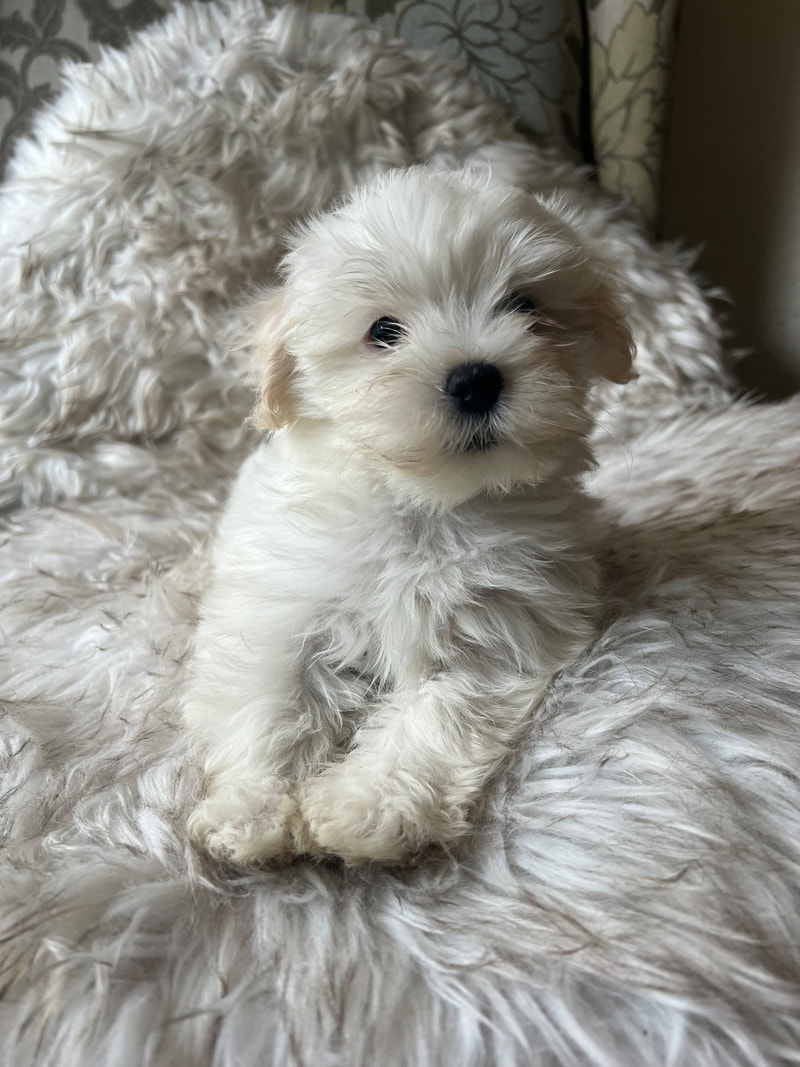
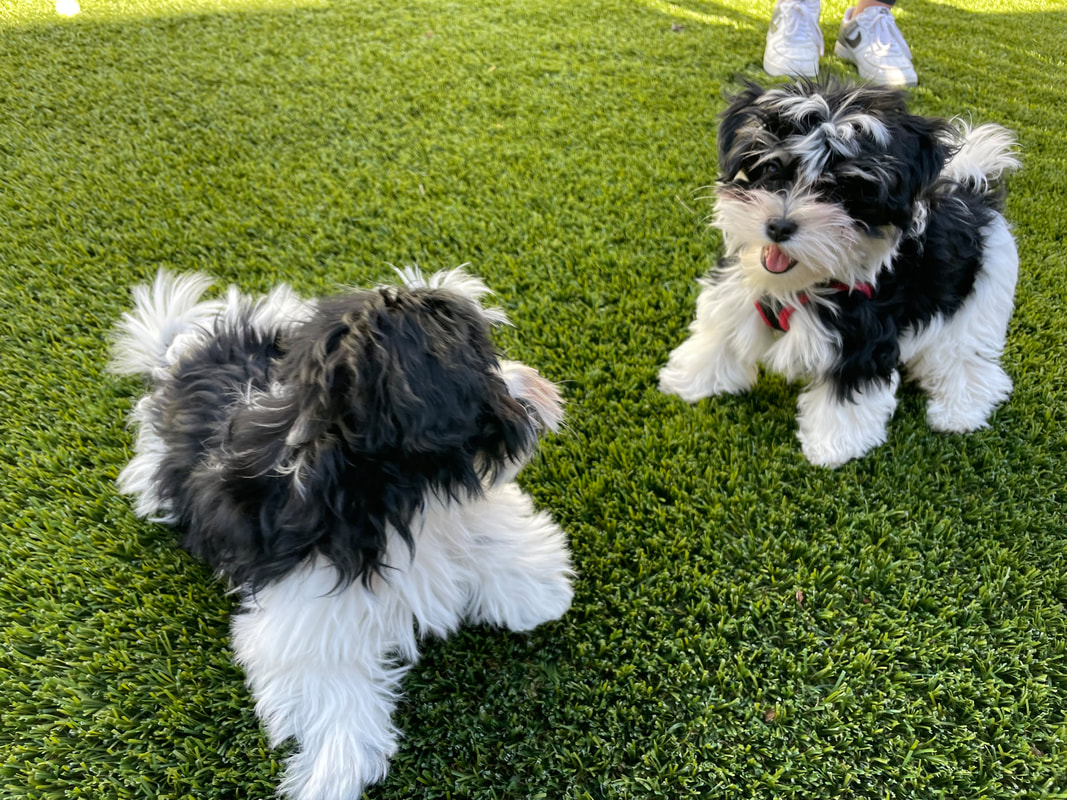
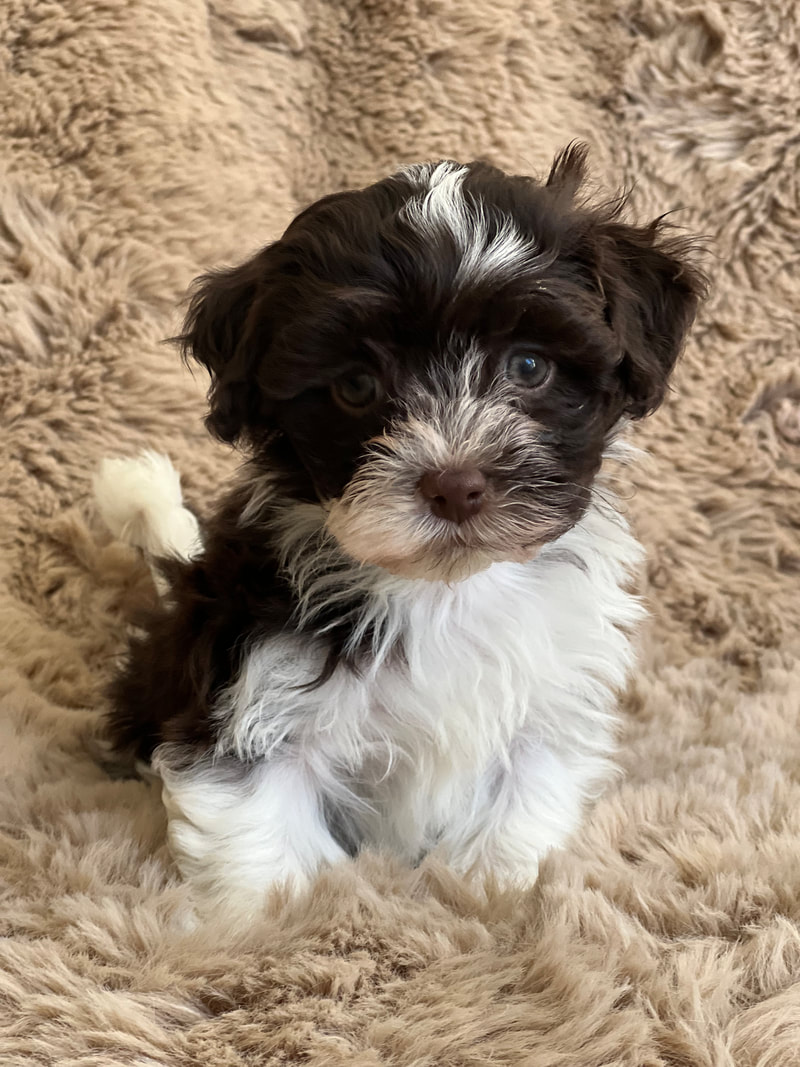
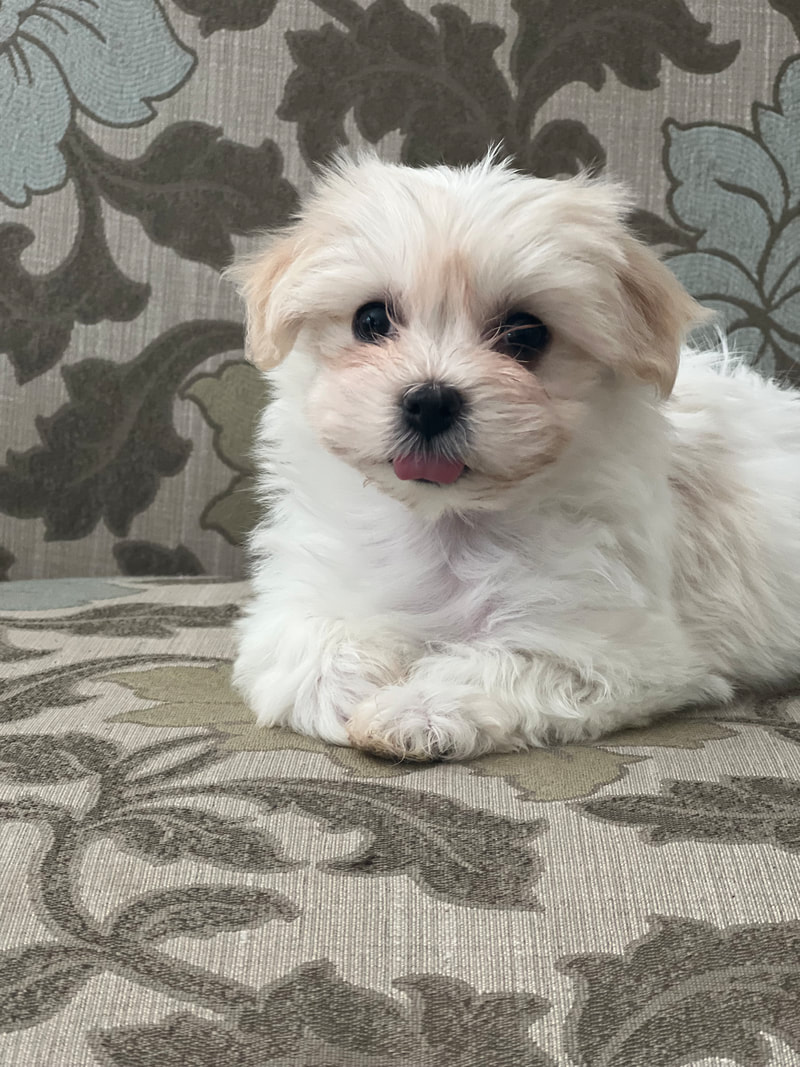
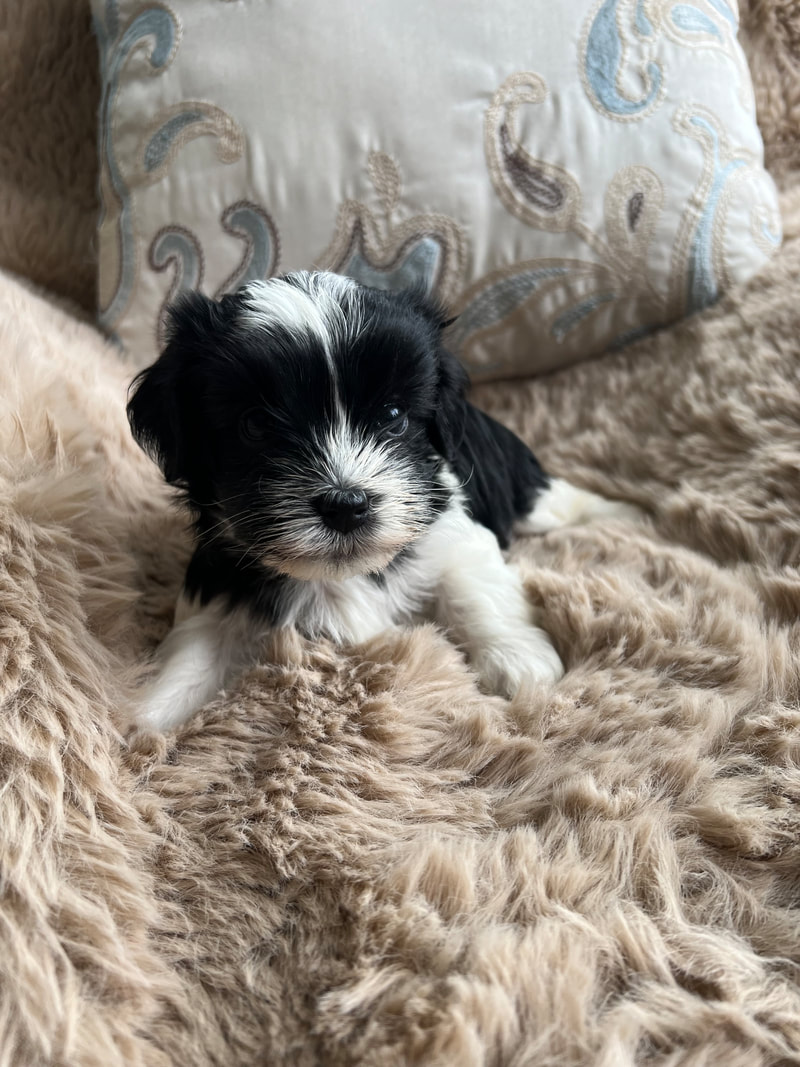
Havanese come in a delightful assortment of colours in both solid and 2 or 3 colour combinations as well as innumerable variations of each. You will find Havanese in solid colours of White, Cream, Champagne, Gold, Red, Chocolate, Sable, Silver, Blue and Black. Any of these colours can combine to create many eye catching 2 and 3 colour coats. Colours develop and change as the dog matures. In many cases the difference between puppy colouration and adult coat may be quite dramatic. Many Havanese lighten significantly from birth to young adulthood. Some darken again later on with maturity though not usually to the depth of colour they had as puppies.